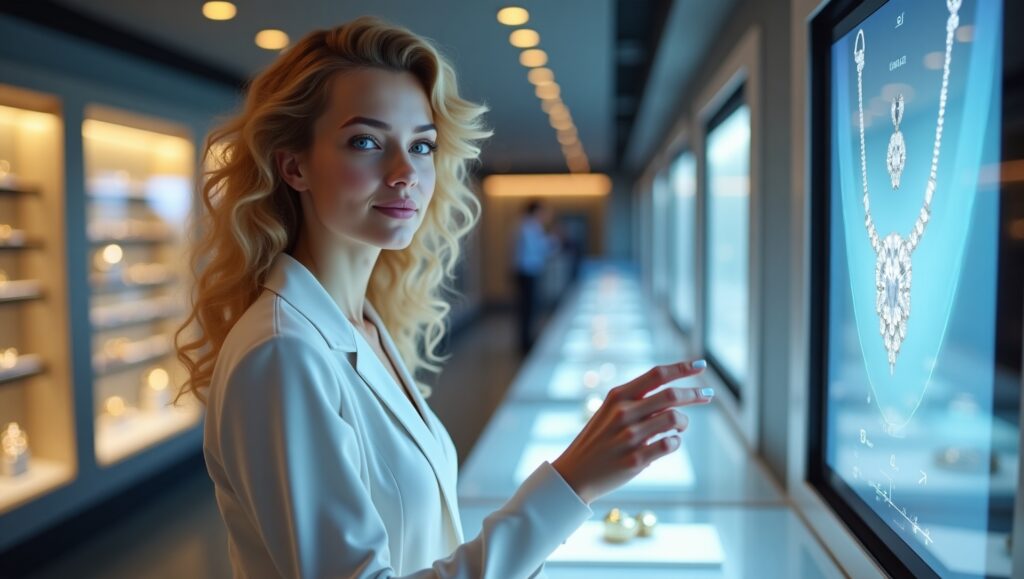
Emotional AI in Jewelry Sales: Reading Buyers Through Tech
The combination of technology and emotions is changing industries in ways we never could have predicted in the fast-paced world of digital innovation of today. The jewelry sales industry is one where this is starting to have a startling effect. More precisely, emotional AI is being utilized to improve the way sellers relate to and comprehend consumers, particularly in the context of buying diamond jewelry.
These days, jewelry purchasing involves more than simply price tags and appearances. The voyage is emotional. People purchase gemstones for the memories, feelings, and meanings they hold in addition to their sparkling appearance. Gemstone jewelry communicates personal tales, whether it’s an emerald pendant given as a birthday present or a ruby ring purchased on a significant anniversary.
What if a merchant could see a customer’s emotions in real time, whether they are in-person or online? Emotional artificial intelligence can help with that.
Emotional AI: What Is It and Why Does Jewelry Need It?
Emotional AI is essentially technology that can identify human emotions. Body language, vocal intonation, facial emotions, and even biometric information like heart rate or eye movement may all be used to do this. Using this knowledge, one may subsequently react to a person’s emotional condition more precisely.
Emotional AI isn’t trying to read your mind—it’s trying to read your heart.
Emotional AI may be used in gemstone jewelry sales to determine if a consumer is really affected by a piece, uncertain, anxious, or thrilled. Imagine entering a jewelry shop and the AI system detecting, without your having to speak, that your eyes brighten at the sight of a certain sapphire ring. The salesman then approaches you with tailored recommendations or anecdotes about the significance of that diamond after seeing that you are emotionally invested.
The Application of Emotional AI in Jewelry Sales
Emotional AI is now being used in the gemstone jewelry industry in a number of intriguing ways:
1. Sentiment analysis and facial recognition in-store
Cameras and facial expression analysis technologies are being placed at certain upscale jewelry shops. Though it seems a little futuristic, it’s not all that different from what our cellphones can accomplish now. The device detects non-verbal clues such as eye movements, frowns, grins, and even raised eyebrows when clients enter and begin perusing. Employees at the shop may learn in real time what attracts clients thanks to this data.
2. Customer Service Voice Analysis
Additionally, emotional AI techniques are used in online chat assistance and over the phone. A customer’s voice may sound apprehensive or excited when they are inquiring about a piece of gemstone jewelry. These tones are detected by the system, which modifies the dialogue. For example, if someone seems uncertain, the AI may ask the salesman to calmly and thoroughly describe the provenance or quality of the diamond.
3. Customized Online Purchasing Experience
Emotional AI is starting to be included into the platforms of online merchants who offer gemstone jewelry. When a buyer peruses rings, necklaces, or bracelets, webcams may be used to observe their facial expressions (with consent). After that, AI will recommend additional products that fit the recorded emotional responses or style. This makes the purchasing experience more intuitive and human.
Jewelry made with gemstones is very individualized. Individuals do not just enter a store and purchase a ruby ring as if they were shopping for groceries. The purchase often has emotional significance. It may be a present. It may be self-love. Perhaps it’s customary. The following explains why emotional AI excels in this field:
Why It’s Revolutionizing Gemstone Jewelry
- Faster trust-building: Customers are more inclined to trust a brand or vendor when they feel heard.
- Boosts emotional connection: AI makes the item even more unforgettable by matching the ideal gemstone with the ideal occasion.
- Increases sales accuracy: You may stop speculating on what the buyer wants. Before they even talk, the system has a good idea.
The Response of Purchasers to Emotional AI
Not everyone is quite at ease with the notion of having their emotions read by technology. And that makes sense. Interestingly, however, a lot of customers do value a more seamless, user-friendly experience. particularly when it isn’t forced.
Customers may choose to use these features in some shops. They are more receptive to it when they realize that it makes it easier and quicker for them to discover the ideal gemstone jewelry.
I first found it unsettling. I was sold, however, when I saw a necklace that really brought tears to my eyes and the shop employees saw it and shared the stone’s history with me.
— An emotive AI customer review at a boutique
Example from the Real World: The Technology That Creates the Sparkle
Emotional AI was incorporated into flagship shops by a well-known luxury brand. At their counters selling gemstone jewelry, they used heart rate monitors and face tracking devices. Increased pupil dilatation and a little grin were seen by one lady who was examining a tourmaline bracelet. Under the AI’s guidance, the staff came over with more matching pieces and gave a short explanation of the significance of tourmaline in relation to emotional recovery.
She purchased a matching pendant in addition to the bracelet. The AI contributed to creating a moment rather than simply a sale.
Advantages for Both Shoppers and Sellers
Here are some benefits that both sides enjoy when purchasing diamond jewelry utilizing emotional AI:
For Customers:
- More firsthand knowledge
- Reduced pressure or tension
- stronger emotional connection with the object
- Quicker decision-making
For sellers:
- Improved comprehension of customers
- Increased rates of conversion
- A higher level of client satisfaction
- Increased brand loyalty
Where Is This Going in the Future?
This is just the start. Our purchasing habits will increasingly include emotional AI, particularly when it comes to sentimental products like diamond jewelry. Here are some potential developments in the near future:
- Real-time reaction-reading virtual try-ons
- AI-generated sentimental tales about every gemstone
- Stores with emotionally charged music and lighting
- Personalized gemstone suggestions derived on mood monitoring applications
The extent of this technology’s development is unknown, but one thing is certain: jewelry buying won’t be chilly or automated in the future. Ironically, AI will make it very human.
Concluding remarks
The goal of emotional AI in jewelry sales is not to control others. The goal is to improve the experience. The act of purchasing gemstone jewelry is already emotional. AI only assists in providing a kinder, more compassionate guide for that trip.
When handled well, it may add even more significance, excitement, and naturalness to the purchasing experience. When someone finds the appropriate item, do their eyes sparkle? Now, technology can really contribute to the celebration of it.
Emotional AI might be your silent helper in finding the ideal gemstone jewelry that talks to your heart, whether you’re purchasing a necklace that whispers “remember” or a ring that screams “forever.”