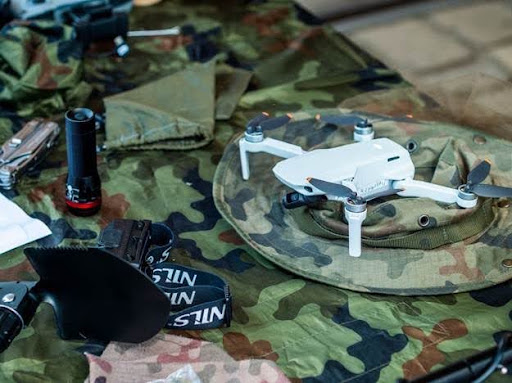
Military Drone Market: Growth Trends, Applications, and Future Outlook
Increasing adoption of technology in warfare to aid in defines operations, particularly military drone systems for surveillance and military reconnaissance has led to steady increase in demand. The Global Military Drone Market has become an important segment to serve the interests of various armed forces. With defines budgets rising worldwide, militaries are prioritizing investments in military drone technology for enhanced defines capabilities. The military drone market was valued at USD 15.57 Billion in 2025 and is expected to reach USD 38.59 Billion by 2035, expanding at a CAGR of 9.50% in the forecast period, according to Expert Market Research.
Understanding the Military Drone Market
This sector encompasses the design, manufacture and deployment of unmanned aerial systems used in the defence and security sector. These could be small unmanned aerial systems used on the battlefield for recon purposes right through to larger aircraft with much greater endurance capabilities. This has become a fast evolving sector in the last 10 years, with governments now appreciating the importance of unmanned systems in reducing risk and improving battlefield awareness, driving the growth of the Military Drone Market. There have been significant increases in the capabilities of onboard sensors, communications, and autonomy of unmanned aircraft.
Key Growth Drivers of the Military Drone Market
A range of reasons has caused this industry sector to increase throughout the world. The main reasons behind its increase have been;
• Increasing global defence budgets focused on modernization of surveillance and reconnaissance technologies.
• Increasing demand for unmanned systems as a substitute for military personnel, on missions deemed of high risk.
• Advances in AI and autonomous navigation lead to greater mission precision and effectiveness.
• Concerns about growing border security measures that have prompted countries to use drones in surveillance of borders on a real-time basis.
• Satellite communication networks to be increased to make it possible to have remote, far ranging drone operations.
• Increasing geopolitical instability in various regions prompting rapid acquisition of defence technologies.
Challenges Facing the Military Drone Market
Despite its consistent growth, this industry isn’t without certain threats:
• The high cost of development and acquisition of advanced sensing and communication technologies
• Export bans imposed by states, as well as arms control regimes governing arms trade across borders.
• Risks of interference, jamming and unauthorized system access
• Complicated approval paths that are necessary for both entry into the airspace and actual operation.
• Dependency on a small set of highly specific suppliers can introduce significant supply chain risk during manufacturing.
Regional Insights into the Military Drone Market
North America is by far the largest region for this sector. Defense investment is very high, and the R & D effort by large aerospace suppliers is ongoing. Asia Pacific is a quickly growing market, as China, India and South Korea continue to build their unmanned capabilities in defense.
Europe is another mature market where ongoing efforts by its members toward cooperative defense projects are continuing, alongside a general need for new equipment modernization programs.
Middle East has a very active procurement market, and several countries continue to invest in security and border monitoring UAV’s, especially given regional stability. Africa and Latin America are small markets, but growing procurement for them is expected as they enhance their security cooperative efforts.
Future Outlook of the Military Drone Market
In terms of future development, autonomous technologies, swarm coordinated technologies and power sources for extended mission durations would enhance this sector. Growing partnerships between private aerospace manufacturers and government defence agencies will lead to shortening development times. Defense authorities are continuously integrating unmanned systems in overall strategy; hence we expect moderate steady growth for the next decade at least.
Frequently Asked Questions (FAQs)
1. What is fuelling demand for military drones?
The growing defense spending and move toward unmanned systems is major factor in growth for the market for military drones
2. What region is best in the military drone world?
Right now, North America has been best due to defense budget, and ability to perform in depth aerospace research for military drones.
3. What is the projected market size by 2035?
It is projected to reach USD 38.59 billion by 2035, growing at a CAGR of 9.50%.
4. What makes these regulations a hurdle for this industry?
This industry faces export hurdles in two areas; international agreements relating to arms control, and strict national export laws.
5. Who are the biggest users of military drones? Major users include military forces, intelligence agencies, and border security forces.
Conclusion
The demand for military drones is steadily growing around the world as armed forces invest more in this technology to aid surveillance, intelligence gathering and tactical missions. Despite regulatory and production price limitations, the continued technological breakthroughs and increasing defence spending by various countries are estimated to fuel market growth in the years to come. Expert Market Research provides the ultimate insights into Military Drones market size, growth rate and projections to ensure you are able to make wise investment choices and strategize accordingly, while gaining a comprehensive understanding of emerging trends, competitive dynamics, technological advancements, and future opportunities across the global defence industry landscape.